Editorial Note: This article is for educational and informational purposes only. It explains basic payday budgeting and cash flow timing after money is received. It does not provide tax, IRS, W-4, withholding, employment, payroll, legal, overtime, union, or career advice.
A monthly budget can look simple on paper: income comes in, bills go out, and the month resets. But real life often depends on payday timing.
If you are paid biweekly, you usually receive a paycheck every two weeks. In a typical 26-paycheck year, that means most months have two paychecks, while two months have three paychecks.
This can create a different cash flow rhythm than being paid once per month. A monthly paycheck creates 12 income events per year. A biweekly paycheck typically creates 26 income events per year. The money may be similar over the year, but the timing can feel very different inside each month.
This guide explains how to use a Biweekly Budget Calculator to organize paydays, bill due dates, and monthly cash flow. It only focuses on money after it arrives in the account. It does not discuss tax withholding, IRS forms, W-4 settings, payroll law, or employment rights.
Quick Answer
A biweekly budget organizes bills around paychecks that arrive every two weeks.
In a typical 26-paycheck year, biweekly pay creates two months with three paychecks. A calculator helps map those paydays against rent, utilities, subscriptions, groceries, and other due dates.
What Does Biweekly Pay Mean?
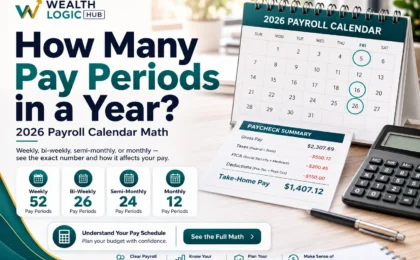
Biweekly pay means being paid every two weeks. Since a year has 52 weeks, a typical biweekly schedule creates 26 paychecks:
Simple Math
52 weeks per year ÷ 2 weeks = 26 biweekly pay periods
Monthly pay creates 12 paychecks per year. Biweekly pay usually creates 26 paychecks per year.
This article uses 26 paychecks as the standard educational example. Some calendar years and employer schedules may create an extra payday. For budgeting, the most accurate method is always to use your actual payroll calendar.
The important point is not payroll policy. The important point is cash flow: when money arrives and when bills are due.
Timing note: This article does not explain payroll rules or paycheck withholding. It only shows how to organize money after paychecks are received.
Biweekly vs. Monthly Pay: The Main Difference
Monthly pay and biweekly pay create different budgeting patterns.
With monthly pay, one paycheck may need to cover the entire month. With biweekly pay, income arrives more often, but bills may still be monthly. That can create timing gaps if several large bills are due before the next paycheck arrives.
| Pay Schedule | Typical Paychecks Per Year | Budgeting Pattern |
|---|---|---|
| Monthly | 12 | One paycheck is usually planned across the full month. |
| Biweekly | 26 | Most months have two paychecks, while two months may have three paychecks. |
Neither schedule is automatically better. They simply require different timing awareness.
Why Biweekly Pay Creates Two Three-Paycheck Months
A year with 26 biweekly paychecks creates more than two paychecks per month on average.
If every month had exactly two paychecks, that would be:
- 2 paychecks × 12 months = 24 paychecks.
But a typical biweekly year has 26 paychecks. The extra two paychecks usually fall into two separate months, creating two months with three paydays.
Soft Finance Reminder
A three-paycheck month is not automatically “extra money.” It is a timing event. The useful question is how that paycheck fits with bills, upcoming expenses, and the next month’s cash flow.
The Basic Biweekly Budget Formula
A biweekly budget can start with a simple formula:
Cash Flow Formula
Biweekly cash available = paycheck amount − bills due before the next paycheck
The goal is to match bills with the paycheck period in which they are due.
This is cash flow planning. It does not decide what to spend, save, or cancel. It simply shows which paycheck is responsible for which bills.
A Simple Biweekly Paycheck Example
Assume someone receives $1,800 every two weeks. In a typical two-paycheck month, that creates $3,600 of income for that month.
Now assume these bills are due during the month:
| Bill or Expense | Due Date | Amount |
|---|---|---|
| Rent | 1st | $1,300 |
| Utilities | 8th | $180 |
| Car payment | 15th | $350 |
| Phone | 20th | $80 |
| Internet | 25th | $70 |
| Groceries and household basics | Throughout month | $600 |
A biweekly budget would not only ask whether $3,600 covers the month. It would also ask which bills fall before each paycheck.
Why Due Dates Matter
Two households can have the same income and the same bills, but very different cash flow experiences depending on due dates.
For example, if rent, utilities, and a car payment are all due before the second paycheck of the month, the first half of the month may feel tight. If due dates are spread out, the month may feel easier to manage.
This is why a bill calendar can be useful. The Consumer Financial Protection Bureau explains that a bill calendar helps track when bills are due and can show when the timing of income and expenses does not match.
You can review the CFPB’s bill calendar resource here: Bill Calendar: Know what you owe and when it is due.
Biweekly Budget Calculator
Map paychecks against bill due dates.
Use the Biweekly Budget Calculator to enter paycheck dates, paycheck amounts, and bill due dates so you can see how cash flow lines up during the month.
Use the Biweekly Budget CalculatorHow to Use a Biweekly Budget Calculator
The Biweekly Budget Calculator is designed to organize timing. It does not change your income or bills. It simply places them on a schedule.
Step 1: Enter your paycheck amount
Use the amount that actually arrives in your account. This article focuses on cash flow after payment is received, not paycheck withholding or tax forms.
Step 2: Enter your payday dates
Add each payday for the month. If you are paid every two weeks, the dates will usually shift through the calendar instead of staying on the same day every month.
Step 3: Enter bill due dates
List rent, utilities, insurance, subscriptions, loan payments, phone bills, internet, childcare, groceries, and other expenses that affect the month.
Step 4: Match bills to paycheck periods
The calculator can show which bills fall between one payday and the next. This helps you see whether one paycheck period is overloaded with due dates.
Step 5: Review months with three paychecks
In a typical 26-paycheck year, two months may have three paychecks. The calculator can help identify those months so they are visible before they arrive.
What the Calculator Cannot Tell You
The calculator cannot tell you how to change tax withholding, fill out IRS forms, handle overtime, interpret payroll law, or make employment decisions. It only organizes received paychecks and bill due dates.
A Two-Paycheck Month Example
Assume two paydays in one month: the 5th and the 19th. Each paycheck is $1,800.
A simple paycheck-based budget may look like this:
| Paycheck | Payday | Bills Assigned | Example Bill Total |
|---|---|---|---|
| Paycheck 1 | 5th | Rent, utilities, groceries | $1,780 |
| Paycheck 2 | 19th | Car payment, phone, internet, groceries | $1,100 |
This example shows why timing matters. The first paycheck may carry a heavier load because rent and utilities are assigned to it. The second paycheck may have more remaining cash flow depending on the bills due during that period.
The calculator can help make that imbalance visible.
A Three-Paycheck Month Example
Now assume a month has three biweekly paydays: the 1st, 15th, and 29th. Each paycheck is still $1,800.
The month now has three income events instead of two:
| Paycheck | Payday | Example Role in Cash Flow |
|---|---|---|
| Paycheck 1 | 1st | Early-month bills such as rent or housing. |
| Paycheck 2 | 15th | Mid-month bills and regular spending. |
| Paycheck 3 | 29th | Late-month bills or upcoming month preparation. |
This third paycheck may feel different because many monthly bills are already assigned to the first two paychecks. However, it still belongs inside the broader cash flow plan.
A calculator can show whether that third paycheck lines up with late-month bills, next month’s rent, annual expenses, or other planned categories.
Planning note: This article does not recommend what to do with a third paycheck. It only explains why identifying three-paycheck months can improve cash flow visibility.
How to Align Bills With Paydays
Aligning bills with paydays means checking whether due dates match the paycheck periods that can cover them.
A simple process looks like this:
- Write down all payday dates for the month.
- Write down all bill due dates for the month.
- Group bills between payday 1 and payday 2.
- Group bills between payday 2 and the next payday.
- Check whether one paycheck period has too many due dates.
This process does not require a complex system. A calendar, spreadsheet, notebook, or calculator can all work. The key is seeing dates together.
Consumer.gov recommends making a list of bills and other expenses when building a budget. A payday calendar is a way to add timing to that list.
Monthly Bills on a Biweekly Schedule
Many bills are monthly, even when paychecks are biweekly. Rent, phone, insurance, internet, utilities, subscriptions, and loan payments may each follow their own due date.
This means a biweekly budget often works best when bills are assigned to pay periods rather than treated as one large monthly total.
For example:
| Pay Period | Dates Covered | Bills to Review |
|---|---|---|
| Period 1 | Payday to next payday | Bills due before the next paycheck. |
| Period 2 | Next payday to following payday | Bills due before the following paycheck. |
| Period 3 | Only in three-paycheck months | Late-month bills or next-month timing needs. |
This structure can help show which paycheck is responsible for which due dates.
Biweekly Budgeting and Groceries
Groceries and household basics usually do not have one fixed due date. They happen throughout the month. That makes them different from rent, phone, or insurance bills.
One simple way to plan variable spending is to assign a grocery amount to each paycheck period.
For example, if the monthly grocery estimate is $600 and there are two paychecks in the month, the planning estimate may be:
- $600 ÷ 2 paychecks = $300 per paycheck period.
In a three-paycheck month, the same monthly estimate may be handled differently depending on the calendar. The calculator can make the timing clearer, but it does not decide how the household should divide the category.
Biweekly Budgeting and Subscriptions
Subscriptions may renew on different dates. Some renew at the beginning of the month, some in the middle, and some near the end. This can make automatic payments easy to overlook.
In a biweekly budget, subscriptions can be assigned to the paycheck period in which they renew.
For example:
| Subscription | Renewal Date | Assigned Paycheck Period |
|---|---|---|
| Streaming plan | 6th | First paycheck period. |
| Music app | 18th | Second paycheck period. |
| Cloud storage | 27th | Late-month or third paycheck period, depending on calendar. |
This keeps automatic charges visible instead of letting them blend into the background.
Common Biweekly Budget Mistakes
Mistake 1: Treating every month as identical
Biweekly payday dates move through the calendar. A month with two paychecks may feel different from a month with three paychecks.
Mistake 2: Ignoring bill due dates
A monthly total can look affordable while one paycheck period still feels tight. Due dates explain part of that timing problem.
Mistake 3: Forgetting irregular expenses
Some expenses do not happen every month. Annual renewals, car registration, school costs, gifts, and insurance premiums may need separate tracking.
Mistake 4: Treating a third paycheck as automatically available
A third paycheck may arrive in a month with fewer regular bills remaining, but it may also connect to next month’s cash flow or irregular expenses. The calculator only shows timing.
Mistake 5: Mixing budgeting with tax withholding questions
This article does not address IRS forms, W-4 settings, payroll withholding, or tax planning. It only covers budgeting after money arrives.
A Simple Payday Budget Worksheet
Before using the calculator, you can organize the month with a simple worksheet.
| Item | Example Entry |
|---|---|
| Paycheck amount | $1,800 |
| Payday 1 | 5th |
| Payday 2 | 19th |
| Possible payday 3 | Only in some months |
| Largest early-month bill | Rent or housing |
| Mid-month bills | Car payment, utilities, subscriptions |
| Variable spending | Groceries, gas, household basics |
This worksheet is only a planning example. Your actual paydays, bill dates, and amounts may be different.
When to Recalculate a Biweekly Budget
A biweekly budget should be updated when timing changes.
You may want to recalculate when:
- Your paycheck amount changes.
- Your payday schedule changes.
- A bill due date changes.
- You add or remove a recurring payment.
- You enter a three-paycheck month.
- You are planning for the next month’s bills.
- Irregular expenses are coming up.
Recalculating does not mean the previous budget failed. It simply means the cash flow calendar changed.
Final Takeaway
Biweekly budgeting is mostly about timing. A typical biweekly schedule creates 26 paychecks per year, which means most months have two paychecks and two months may have three paychecks.
The main challenge is matching paydays with bill due dates. A bill calendar and a Biweekly Budget Calculator can help show which bills belong to each paycheck period.
This kind of planning does not decide what to spend, save, or change. It only makes cash flow easier to see after paychecks arrive.
Bottom line: a biweekly budget works best when you stop looking only at the month total and start looking at the timing of each paycheck and each bill.
Next Step
Build a budget around your next paydays.
Enter your paychecks, bill due dates, and recurring expenses to see how your cash flow lines up across a biweekly schedule.
Open the Biweekly Budget CalculatorFAQ
What is a biweekly budget?
A biweekly budget organizes money around paychecks that arrive every two weeks. It matches paycheck dates with bill due dates so each pay period has a clearer cash flow plan.
How many paychecks are in a biweekly year?
A typical biweekly schedule has 26 paychecks in a year because 52 weeks divided by 2 weeks equals 26 pay periods. Some calendar years or employer schedules may differ, so use your actual payroll calendar.
Why are there two three-paycheck months?
If every month had two paychecks, that would create 24 paychecks per year. A typical biweekly year has 26 paychecks, so the extra two paychecks usually fall into two months with three paydays.
What does a biweekly budget calculator do?
A biweekly budget calculator helps map paycheck dates, paycheck amounts, and bill due dates. It shows how bills line up between one payday and the next.
Is biweekly budgeting the same as monthly budgeting?
No. Monthly budgeting looks at the whole month, while biweekly budgeting focuses on the timing between paychecks. Both can use the same bills, but the cash flow view is different.
Does this article explain W-4 or tax withholding?
No. This article does not explain IRS forms, W-4 settings, tax withholding, or payroll law. It only explains budgeting after money has arrived in the account.
How should I use a three-paycheck month?
This article does not recommend how to use a third paycheck. It only explains that a three-paycheck month is a cash flow timing event that can be made visible with a budget calendar.
Disclaimer & Editorial Disclosure
Informational Purposes Only: This content and the attached calculators are for educational and informational purposes only. They do not constitute financial, investment, tax, legal, banking, credit, debt repayment, employment, payroll, withholding, overtime, union, worker classification, or career advice. All examples are hypothetical and simplified for learning purposes.
No Individual Recommendation: The Biweekly Budget Calculator organizes paycheck dates, paycheck amounts, bill due dates, and expense timing based on the numbers you enter. It does not evaluate your full financial situation, recommend spending decisions, change paycheck withholding, or determine whether any budget choice is appropriate for you.
Editorial Note: Wealth Logic Hub publishes educational content and calculator-based resources. References to biweekly pay, monthly budgeting, bill calendars, and cash flow are provided for general information only and should not be treated as personalized financial, legal, tax, payroll, or career guidance.