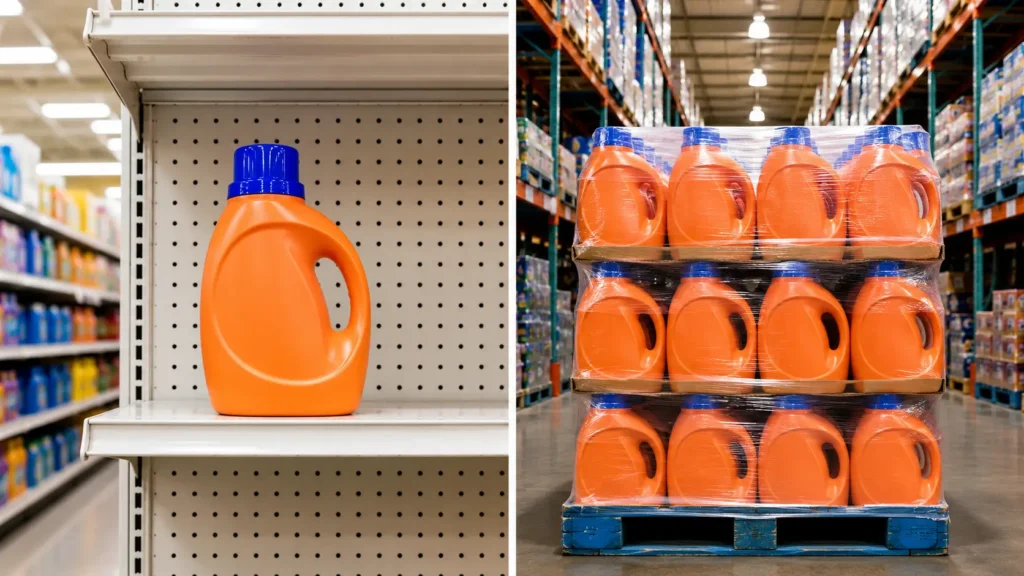
A warehouse club price can look like an obvious win at first glance. The package is larger, the unit price looks smaller, and the receipt may make the purchase feel more efficient.
But bulk shopping has a second layer of math. A lower price per ounce, pound, item, or serving only helps if the household can actually use the quantity, store it, and account for any membership cost connected to the purchase.
That is the idea behind buying in bulk math. Instead of asking whether bulk shopping is always good or bad, this approach compares the numbers that change the real cost: unit price, usable quantity, membership allocation, storage space, and waste risk.
Educational math note: This article explains simple consumer math for informational and educational purposes only. It does not provide financial, tax, legal, shopping, product, or professional advice.
The Core Idea
Buying in bulk may save money when the lower unit price is larger than the added membership cost, storage burden, and waste risk.
The basic comparison is not just shelf price. It is the usable cost per unit after the full quantity and related costs are considered.
The Basic Buying in Bulk Formula
The simplest version starts with unit price:
Unit price = package price ÷ package quantity
That formula helps compare different package sizes. For example, a $6.00 package with 12 units costs $0.50 per unit. A $15.00 bulk package with 40 units costs $0.375 per unit.
But bulk math usually needs one more step:
Effective bulk cost = bulk package cost + membership allocation + estimated waste cost
That second formula is what makes the comparison more realistic. A large package can have a lower unit price and still be less useful if part of it expires, sits unused, or requires a membership fee that is not spread across many purchases.
Buying in Bulk Calculator
The calculator below compares a regular package with a bulk package. It estimates the regular cost for the amount you expect to use, compares it with the effective bulk cost, and shows whether the example creates an estimated savings or extra cost.
Buying in Bulk Calculator
Compare regular price with bulk price.
Enter a regular package, a bulk package, the quantity you expect to use, and any membership cost you want to allocate to this purchase. The calculator estimates the difference.
Regular package
Bulk package
Real-use assumptions
Please review the numbers entered.
This tool is a simple estimate. It does not account for every household preference, store policy, storage limit, or product-specific issue.
The result updates automatically as the inputs change.
Start With Unit Price, Not Package Price
The first mistake in bulk shopping math is comparing package price to package price. A $15 bulk package is not automatically more expensive than a $6 regular package. It may contain several times more product.
Unit price makes the package sizes comparable. The unit can be ounces, pounds, sheets, servings, tablets, bottles, diapers, trash bags, or any other consistent measurement.
| Package | Price | Quantity | Unit Price |
|---|---|---|---|
| Regular package | $6.00 | 12 units | $0.50 per unit |
| Bulk package | $15.00 | 40 units | $0.38 per unit |
In this example, the bulk package has the lower unit price. That is the first sign that it may be cheaper. It is not the final answer.
The Membership Fee Changes the Math
Warehouse clubs often involve a membership fee. That fee does not belong entirely to one purchase unless the membership is used only once. But it also should not be ignored completely.
A practical way to estimate the fee is to allocate a small share of it to each shopping trip or purchase category.
Membership cost per trip = annual membership fee ÷ expected shopping trips per year
For example, if a hypothetical membership costs $60 per year and a household uses it for 20 meaningful trips, the membership cost is $3 per trip before any item-level comparison begins.
This does not mean the membership is good or bad. It only means the membership fee is part of the total math when estimating bulk savings.
The Waste Question: Can You Use the Full Package?
Bulk pricing can break down when part of the package is not used. This matters most for food, personal care items with limited use, products with expiration dates, or items that lose quality after opening.
For bulk math, the usable quantity matters more than the package quantity.
Usable unit price = effective bulk cost ÷ quantity actually used
If a bulk item costs $15 for 40 units, the shelf unit price is $0.38. But if only 25 units are used before the rest is wasted, the usable unit price becomes $0.60 before even adding membership cost.
Blind Spot Snapshot
A bulk item can have a lower shelf unit price and still cost more per usable unit if part of the package expires, gets thrown away, or sits unused.
A Simple Bulk Buying Example
Here is a hypothetical example using a regular package and a bulk package of the same item.
| Line Item | Regular Package | Bulk Package |
|---|---|---|
| Package price | $6.00 | $15.00 |
| Package quantity | 12 units | 40 units |
| Shelf unit price | $0.50 | $0.38 |
| Expected quantity used | 40 units equivalent | 40 units |
| Regular equivalent cost | $20.00 | — |
| Bulk cost plus membership allocation | — | $17.00 |
| Estimated difference | — | $3.00 lower |
In this example, the bulk option looks cheaper after assigning $2 of membership cost to the purchase. But the result depends on using all 40 units. If only 25 units are used, the comparison changes.
| Line Item | Amount |
|---|---|
| Regular equivalent cost for 25 units | $12.50 |
| Bulk cost plus membership allocation | $17.00 |
| Estimated difference | $4.50 higher |
The same bulk package can look useful in one scenario and costly in another. The difference is not the store. It is the usable quantity.
Break-Even Quantity: How Much Do You Need to Use?
The break-even quantity estimates how many units need to be used before the bulk discount offsets an added cost such as a membership allocation.
Break-even quantity = membership allocation ÷ savings per unit
Suppose the regular unit price is $0.50 and the bulk unit price is $0.38. The savings per unit is $0.12. If $2 of membership cost is assigned to the purchase, the break-even quantity is about 16.7 units.
That means the first 16 or 17 units mostly offset the assigned membership cost. The estimated savings appears after that point. This is only a simplified estimate, but it makes the tradeoff more visible.
Storage Has a Cost Even When It Has No Price Tag
Storage cost is harder to measure than unit price, but it still affects the real-world usefulness of buying in bulk.
A large package may require pantry space, freezer space, garage space, or a container that keeps the item usable. In a small apartment or crowded kitchen, storage pressure can make a lower unit price less practical.
Storage does not always need a dollar value in the table. Sometimes it is enough to mark it as a constraint:
| Storage Question | Why It Matters |
|---|---|
| Is there enough space? | A lower price may not help if the item creates clutter or cannot be stored safely. |
| Does the item need refrigeration or freezing? | Cold storage can be limited and may affect what else can be stored. |
| Does the item lose quality after opening? | The full package size may not equal the usable amount. |
| Is the item easy to divide or share? | Portioning can affect how much is actually used. |
Items That Are Easier to Compare in Bulk
Some items are easier to evaluate with bulk math because the usable quantity is more predictable. This does not mean they are automatically worth buying in bulk. It only means the math is usually cleaner.
- paper products;
- cleaning supplies;
- trash bags;
- laundry products;
- diapers or wipes when usage is predictable;
- non-perishable pantry staples;
- personal care products with long shelf lives;
- frequently used household consumables.
These categories often have a clearer use rate. When the household already uses the item regularly, the bulk quantity is easier to compare against normal buying patterns.
Items That Need Extra Math
Other categories can be harder to evaluate because the full package may not be used at the same pace.
- fresh produce;
- large condiment bottles;
- snacks that may change eating patterns;
- items bought because they are displayed prominently;
- products that require freezer space;
- items with short expiration dates;
- products a household has not tried before;
- large variety packs where some flavors or types may go unused.
With these items, the shelf unit price may be less important than the usable unit price. A household that uses the full package may see a different result from a household that uses only part of it.
Bulk Shopping and Grocery Budget Timing
Bulk purchases can also affect the timing of a grocery budget. A warehouse trip may cost more in one week because it pulls several future purchases into the present.
For example, a household may buy two months of paper products, several weeks of pantry items, and a large pack of freezer food in one trip. The receipt is higher, but some future grocery trips may be lower.
That is why monthly averages can be more useful than one-receipt comparisons. One week may look expensive, while the average over several weeks may be more stable.
For broader grocery planning, see our groceries budget guide. For a more general monthly budget split, the 50/30/20 Budget Calculator can help estimate broad categories before comparing individual purchases.
Related Guide
Compare bulk buying inside the broader grocery picture.
Bulk purchases can make one shopping trip look larger while lowering later trips. A monthly grocery view can make that timing easier to compare.
Read the Groceries Budget GuideBulk Buying vs. Unit Price Math
Buying in bulk math is closely connected to unit price math, but the two are not identical.
| Concept | What It Measures | What It May Miss |
|---|---|---|
| Unit price math | Price per ounce, pound, serving, item, or other unit | Membership fees, storage, waste, and use rate |
| Bulk buying math | Whether a larger package creates a lower effective cost | Personal preferences, convenience, space limits, and product quality changes |
Unit price is the starting point. Bulk math adds real-use assumptions on top of it.
A Simple Bulk Buying Checklist
Before comparing a bulk item, it helps to collect the same basic inputs each time.
- regular package price;
- regular package quantity;
- bulk package price;
- bulk package quantity;
- unit of measurement;
- expected quantity used before waste or expiration;
- membership cost allocation;
- storage requirements;
- expiration date or quality window;
- normal household use rate.
The goal is not to make every grocery trip complicated. The goal is to avoid mistaking a large package for an automatic savings calculation.
What This Article Cannot Tell You
This article explains consumer math. It cannot determine whether a warehouse club membership, grocery purchase, household product, or shopping routine is appropriate for any specific person or household.
It does not decide:
- which store someone should use;
- whether a membership is worth paying for;
- whether any specific product should be purchased;
- whether a household should buy more or less of an item;
- whether a product is healthy, safe, suitable, or high quality;
- how any household should allocate its grocery budget.
The purpose is only to show how the numbers can be compared more clearly.
The Bottom Line
Buying in bulk can look cheaper because the package is larger and the shelf unit price is often lower. But the more useful calculation includes membership allocation, usable quantity, storage, and waste risk.
The core question is simple: how much of the bulk package will actually be used, and what is the effective cost of that usable amount?
When the usable bulk cost is lower than the regular equivalent cost, the math may show an estimated savings. When waste, membership allocation, or low use rate erases the unit-price difference, the same bulk purchase may cost more than it first appears.
FAQ
What is buying in bulk math?
Buying in bulk math compares regular package cost with bulk package cost by using unit price, usable quantity, membership allocation, storage limits, and waste risk. It helps estimate whether the bulk purchase has a lower effective cost.
How do you calculate whether bulk buying saves money?
Start by dividing each package price by its quantity to get unit price. Then compare the regular equivalent cost with the bulk cost after adding any membership allocation and considering how much of the bulk package will actually be used.
Why can buying in bulk cost more?
Buying in bulk can cost more when part of the package is wasted, the item expires, the household does not use it quickly enough, storage is limited, or the membership cost is not spread across enough useful purchases.
What is unit price?
Unit price is the cost per ounce, pound, serving, item, or other consistent unit. It is calculated by dividing package price by package quantity.
What is break-even quantity in bulk shopping?
Break-even quantity estimates how many units need to be used before the unit-price savings offset an added cost, such as a membership allocation.
Is a lower bulk unit price always better?
No. A lower bulk unit price is only one part of the comparison. The usable quantity, waste risk, storage needs, and membership allocation can change the effective cost.
Disclaimer & Editorial Disclosure
Educational Purposes Only: This content is for educational and informational purposes only. It explains general consumer math, unit price comparison, grocery-cost visibility, and household purchasing calculations. It does not constitute financial, tax, legal, shopping, product, health, nutrition, safety, or professional advice.
No Individual Recommendation: The examples in this article do not determine whether any person should buy in bulk, join a warehouse club, choose a specific store, purchase a specific product, or change a household shopping routine. Actual results vary by prices, location, membership costs, household size, product use, waste, storage, and personal circumstances.
Editorial Note: Wealth Logic Hub publishes educational content about everyday math, budgeting visibility, and calculator-based learning. References to buying in bulk, warehouse clubs, grocery costs, unit price, membership allocation, storage, and waste risk are provided for general informational purposes only.