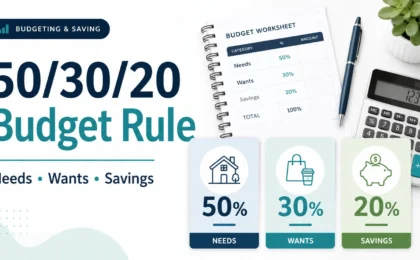
The 50/30/20 Budget Rule Math: How to Calculate Your Categories
The 50/30/20 budget rule divides monthly net income into needs, wants, and savings categories using a simple percentage formula.
Archive
Budgeting & Saving frameworks and practical guides to help readers organize monthly finances, understand spending patterns, set savings goals, and plan for emergencies.
The 50/30/20 budget rule divides monthly net income into needs, wants, and savings categories using a simple percentage formula.

The leftover money method shows how to estimate money left after bills by subtracting fixed costs and planned reserves from monthly take-home income.
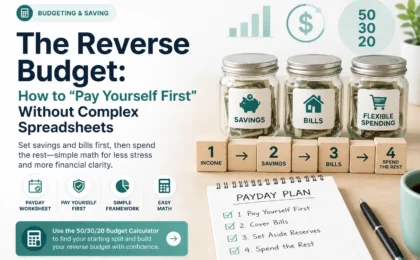
A reverse budget starts with savings and fixed bills first, then leaves the remaining money for flexible spending without tracking every small purchase.

See how sinking funds break a future expense into smaller monthly savings amounts by dividing the goal by the number of months available.
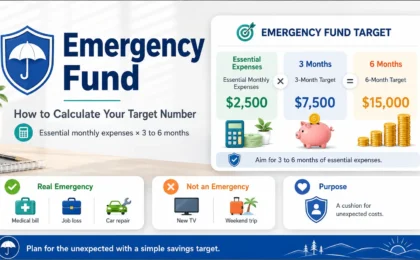
Estimate an emergency fund target by multiplying essential monthly expenses by three to six months using simple planning math.
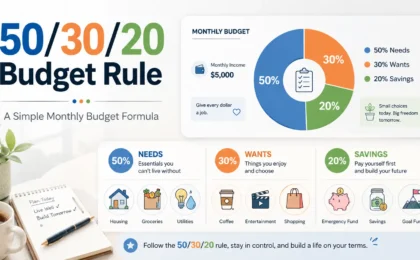
Learn how the 50/30/20 budget rule divides monthly take-home pay into needs, wants, and savings or debt-related goals using simple percentage math.