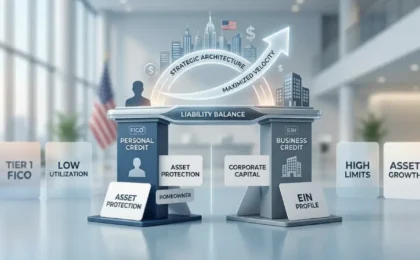
In the sophisticated landscape of 2026 consumer finance, a credit card is no longer just a payment instrument—it is a strategic asset within a broader capital architecture. For the high-net-worth individual or the disciplined optimizer, the goal has shifted from merely collecting points to mastering Reward Velocity: the speed at which one can generate, multiply, and deploy liquid financial rewards.
To achieve this, you must move beyond scattered applications and adopt a methodology of Strategic Sequencing.
1. The Shift from Points to Velocity
Historically, cardholders focused on “point hoarding.” In 2026, inflation and devaluations in loyalty programs have made points a depreciating asset. Elite cardholders now focus on Point Burning Efficiency—the ability to turn spending into high-value redemptions, such as international first-class travel or direct cash-asset transfers, within a 90-day cycle.
2. The Tier-1 Strategic Sequence
To build a “Gold Standard” portfolio, you must apply for cards in a specific logical order to navigate issuer-specific rules and protect your credit architecture.
Phase I: The Anchor Card
Your first move must be an “Anchor.” This card is designed for high-frequency, high-volume daily spend categories like groceries, gas, and streaming.
- Objective: Establish a baseline for constant point accumulation.
- The 2026 Pick: Look for cards offering at least 4x on primary living expenses.
Phase II: The Multiplier
Once the baseline is set, you need a card that elevates the value of every point earned in Phase I.
- Objective: Access to premium transfer partners.
- Yield Strategy: Without a “Multiplier,” points are often worth only 1 cent each; with it, you can achieve a yield of 2.5 to 4.5 cents per point through strategic transfers.
Phase III: The Luxury Perimeter
The final phase involves cards that offer high annual fees but provide “Direct Offset” credits for travel, lounge access, and concierge services.
- Objective: Lifestyle subsidization.
- Value Proposition: These cards justify their cost by reducing out-of-pocket expenses for services you already use.
3. Credit Architecture & FICO Protection
Strategic sequencing is not just about rewards; it is about defense. Every application must be calculated against your Debt-to-Income (DTI) ratio and your FICO Score stability.
- Velocity Control: Limit “Hard Inquiries” to no more than two per six-month window to maintain a “Prime” profile for future mortgage or business lending needs.
- Utilization Engineering: Maintain an overall utilization rate below 3% by leveraging high-limit cards to anchor your total available credit.
4. Ecosystem Synergy: The Network Effect
The true power of a Tier-1 portfolio comes from the synergy between cards. When your daily spending (Anchor), your travel bookings (Luxury), and your points transfers (Multiplier) all live within the same ecosystem, you create a Financial Network Effect. This integrated approach ensures that every dollar spent works toward a singular wealth-building objective rather than being fragmented across disconnected programs.
Conclusion: The 2026 Mandate
Don’t be a passive consumer of credit. By treating your credit cards as a sequenced architecture, you maximize the yield of every dollar spent and position yourself at the top of the financial food chain. In a market that rewards precision, your portfolio sequence is your most valuable financial roadmap.

Related articles
Mastering Velocity Banking: Using Strategic Credit Lines to Accelerate Debt Liquidation
The Corporate Credit Arbitrage: Transforming High-Limit Spending into Scalable Growth Capital in 2026
The Power of the Trifecta: Engineered Spending for Maximum Yield