Most payroll schedules have 52 weekly pay periods, 26 bi-weekly pay periods, 24 semi-monthly pay periods, or 12 monthly pay periods in a year. The exact number depends on how often payroll is processed and, in some cases, where the payday dates fall on the calendar.
| Pay Schedule | Typical Pay Periods Per Year | Basic Math |
|---|---|---|
| Weekly | 52 | 52 weeks × 1 paycheck |
| Bi-weekly | 26 | 52 weeks ÷ 2 |
| Semi-monthly | 24 | 2 paychecks × 12 months |
| Monthly | 12 | 1 paycheck × 12 months |
Educational payroll math note: This article explains general paycheck frequency math for informational purposes only. It does not provide tax, payroll, legal, financial, accounting, or professional advice.
Pay periods matter because the same annual salary can be divided in different ways. A person paid bi-weekly receives more checks during the year than a person paid semi-monthly, but each individual paycheck is usually smaller when the annual salary is the same.
The Math Behind the Pay Periods
The starting point is simple: a standard year has 52 weeks. That is why weekly and bi-weekly payroll schedules are usually based on 52.
For weekly pay, the calculation is direct:
52 weeks × 1 paycheck per week = 52 pay periods per year
For bi-weekly pay, the paycheck arrives every two weeks:
52 weeks ÷ 2 = 26 bi-weekly pay periods per year
Semi-monthly pay uses months instead of weeks. Since there are 12 months in a year and two paychecks per month, the math is:
12 months × 2 paychecks per month = 24 semi-monthly pay periods per year
Monthly pay is the simplest version:
12 months × 1 paycheck per month = 12 monthly pay periods per year
Bi-weekly vs. Semi-monthly: What’s the Difference?
Bi-weekly and semi-monthly pay are often confused because both usually create about two paychecks per month. The difference is that they are built on different calendars.
| Pay Type | How It Works | Paychecks Per Year | Common Pattern |
|---|---|---|---|
| Bi-weekly | Paid every two weeks | Usually 26 | Often every other Friday |
| Semi-monthly | Paid twice per month | Always 24 | Often the 1st and 15th, or 15th and last day |
Bi-weekly pay follows a 14-day rhythm. Because months are not exactly four weeks long, two months in a typical bi-weekly payroll year can contain three paychecks instead of two.
Semi-monthly pay follows the calendar month. It usually creates two paychecks every month, no matter how many Fridays or workweeks fall inside that month.
Related Calculator
Calculate Your Take-Home Pay
Your annual salary might be the same, but the amount received per paycheck changes depending on whether the year is divided into 12, 24, 26, or 52 pay periods.
Use the paycheck calculator to enter gross pay, pay frequency, deductions, and tax assumptions, then estimate take-home pay per paycheck.
Use the Paycheck CalculatorHow Your Pay Frequency Affects Your Budget
Pay frequency changes how income appears during the month. It does not automatically change annual gross salary. Instead, it changes how that annual amount is divided across the calendar.
Here is a simplified example using a $60,000 annual salary before taxes or deductions:
| Pay Schedule | Pay Periods Per Year | Gross Pay Per Period |
|---|---|---|
| Weekly | 52 | $1,153.85 |
| Bi-weekly | 26 | $2,307.69 |
| Semi-monthly | 24 | $2,500.00 |
| Monthly | 12 | $5,000.00 |
The annual gross pay is the same in every row. The paycheck amount changes because the number of pay periods changes.
Blind Spot Snapshot
A semi-monthly paycheck may look larger than a bi-weekly paycheck for the same annual salary because the salary is divided by 24 instead of 26. That does not mean the annual salary is higher. It means each paycheck carries a larger share of the same yearly amount.
The “Three-Paycheck Month” Math
In a bi-weekly schedule, paychecks arrive every 14 days. Since most months are longer than 28 days, the payday pattern eventually creates months with three paychecks instead of two.
That is why a bi-weekly payroll calendar usually has 26 paychecks across the year:
24 paychecks can cover two paychecks per month. The other 2 paychecks appear in months with a third payday.
For household math, those third-paycheck months can be useful to identify ahead of time. Some people model the first two paychecks as the normal monthly income pattern and treat the third paycheck as a separate planning event. This is only a budgeting structure, not a rule or recommendation.
How Many Bi-weekly Pay Periods Are in 2026?
Most bi-weekly payroll schedules have 26 pay periods in 2026. However, a 27-paycheck year can happen when the employer’s exact payday calendar places 27 pay dates inside the same calendar year.
That means the best answer is:
- Typical bi-weekly schedule in 2026: 26 pay periods;
- Possible exception: 27 paychecks if the payroll calendar creates 27 actual payday dates during 2026.
This is why payroll calendars should be checked by actual payday date, not only by pay frequency label.
Weekly, Bi-weekly, Semi-monthly, and Monthly Pay Compared
Each schedule divides the year differently. The table below shows the normal payroll math:
| Schedule | Pay Frequency | Typical Annual Pay Periods | Budgeting Pattern |
|---|---|---|---|
| Weekly | Every week | 52 | Smaller checks, more often |
| Bi-weekly | Every two weeks | 26 | Usually two checks per month, with two three-paycheck months |
| Semi-monthly | Twice per month | 24 | Two checks every month |
| Monthly | Once per month | 12 | One larger check per month |
No schedule is automatically better for every household. The main difference is timing. The same annual salary can feel different when it is split into 12, 24, 26, or 52 pieces.
Pay Periods and Take-Home Pay
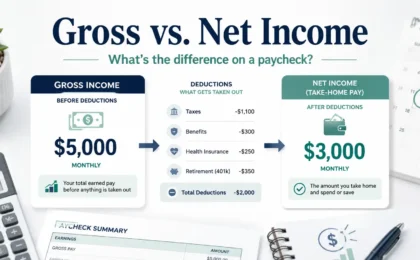
Gross pay per period is only the first layer. A real paycheck may also include federal tax withholding, state tax assumptions, FICA, pre-tax deductions, post-tax deductions, and other payroll items.
A simplified paycheck flow looks like this:
Gross pay − taxes − deductions = estimated take-home pay
The number of pay periods affects the size of each paycheck because the yearly amount is divided into more or fewer payments. To model the actual paycheck estimate, use the Paycheck Calculator.
What This Article Cannot Tell You
This article explains pay period math. It does not calculate payroll withholding, tax liability, employment classification, overtime rules, bonus withholding, state payroll rules, benefits, or employer-specific payroll policies.
It also does not say which pay schedule is better. Weekly, bi-weekly, semi-monthly, and monthly schedules can all work differently depending on the employer, payroll calendar, deductions, and household timing.
The Bottom Line
There are usually 52 weekly, 26 bi-weekly, 24 semi-monthly, or 12 monthly pay periods in a year.
The most important distinction is between bi-weekly and semi-monthly pay. Bi-weekly pay follows a 14-day schedule and usually creates 26 paychecks. Semi-monthly pay follows the calendar month and creates exactly 24 paychecks.
For paycheck planning, the number of pay periods matters because it changes the gross amount per paycheck, even when the annual salary is the same.
FAQ
How many pay periods are in a year?
Most payroll schedules have 52 weekly pay periods, 26 bi-weekly pay periods, 24 semi-monthly pay periods, or 12 monthly pay periods in a year. The exact count can depend on the employer’s payroll calendar.
How many bi-weekly pay periods are in 2026?
Most bi-weekly payroll schedules have 26 pay periods in 2026. A 27-paycheck year can happen if the employer’s exact payday calendar places 27 payday dates within the year.
Is it better to be paid bi-weekly or semi-monthly?
Neither schedule is automatically better for everyone. Bi-weekly pay usually creates 26 paychecks per year, while semi-monthly pay creates 24. The annual salary may be the same, but the paycheck timing and amount per check differ.
Do you get paid more if you get paid weekly?
Not automatically. Weekly pay divides annual gross pay into more paychecks, but it does not increase the annual salary by itself. It changes the timing and size of each paycheck.
Why do bi-weekly employees sometimes get three paychecks in a month?
Bi-weekly pay happens every 14 days. Since most months are longer than 28 days, some months can include three paydays instead of two. This usually happens twice in a typical 26-paycheck year.
Disclaimer & Editorial Disclosure
Educational Purposes Only: This article is for educational and informational purposes only. It explains general payroll calendar math and paycheck frequency concepts. It does not provide tax, payroll, legal, financial, accounting, employment, benefits, or professional advice.
No Payroll or Tax Determination: Paycheck amounts, tax withholding, deductions, benefits, overtime, bonuses, payroll calendars, and state rules can vary by employer and individual circumstances. This article does not calculate official payroll results or determine any employee’s actual take-home pay.