Building wealth isn’t about finding a magic formula or getting lucky overnight. It is a methodical process of earning, saving, and investing wisely over time. As we navigate through the economic shifts of 2026, understanding how to allocate your assets has never been more critical for long-term financial stability.
Whether you are just starting your journey toward financial independence or looking to optimize an existing portfolio, the right strategies can exponentially accelerate your progress.
Why 2026 is a Crucial Year for Your Portfolio
The financial landscape is constantly evolving. With fluctuating interest rates and the continuous rise of technology-driven markets, traditional saving methods are no longer sufficient to beat inflation. To build true wealth, your money needs to work harder than you do.
“The stock market is a device for transferring money from the impatient to the patient.” – Warren Buffett
This timeless principle remains the cornerstone of modern wealth accumulation. Patience, combined with aggressive and strategic asset allocation, separates successful investors from the rest.
Top Wealth-Building Strategies to Implement Today
To maximize your returns and minimize risks, you need a diversified approach. Here are the core strategies you should be focusing on:
1. Maximize Employer Matches and Tax-Advantaged Accounts
Before looking at taxable brokerage accounts, ensure you are taking full advantage of your 401(k) and IRA options.
- The 401(k) Match: If your employer offers a match, contribute at least enough to get the full amount. It is essentially free money.
- Roth IRA: Consider the tax-free growth potential of a Roth IRA, especially if you expect to be in a higher tax bracket during retirement.
2. Invest Heavily in Low-Cost Index Funds
Active trading often leads to underperformance due to fees and emotional decision-making. Index funds offer a simple, low-cost way to own a piece of the entire market.
- Diversification: By purchasing a single fund (like one tracking the S&P 500), you instantly own shares in hundreds of top-performing companies.
- Low Expense Ratios: Keep more of your money working for you rather than paying management fees.
Comparing Investment Vehicles: A Quick Overview
It is vital to understand the difference between common investment vehicles.
| Investment Type | Risk Level | Historical Average Return | Liquidity |
| High-Yield Savings | Very Low | 3% – 5% | High |
| Bonds | Low to Medium | 4% – 6% | Medium |
| Index Funds (S&P 500) | Medium | 8% – 10% | High |
| Real Estate (Physical) | Medium to High | 7% – 12% | Low |
3. Build a Robust Emergency Fund
Investing without an emergency fund is like walking a tightrope without a net. Aim to save three to six months of living expenses in a High-Yield Savings Account (HYSA). This ensures that unexpected expenses won’t force you to liquidate your investments at a loss.
4. Optimize Your Credit Score for Leverage
In the United States, your credit score dictates your financial purchasing power. A score above 740 unlocks the best interest rates on mortgages and loans, which can save you hundreds of thousands of dollars over a lifetime. Always pay balances in full and keep credit utilization below 30%.
The Path Forward: Consistency is Key
The journey to financial freedom is a marathon, not a sprint. By automating your investments, keeping your expenses in check, and ignoring short-term market noise, you position yourself for spectacular long-term success.
Start small if you must, but start today. The compounding interest engine only works if you give it time to run.

Related articles
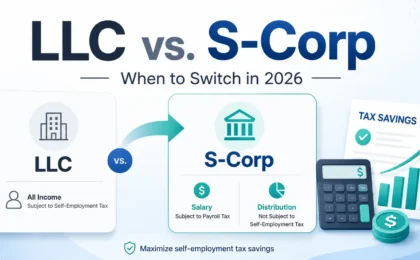
LLC vs S-Corp in 2026: When to Switch and Maximize Tax Savings

The Institutional Pivot: Why Ultra-High-Net-Worth Investors are Dominating Private Equity in 2026

The Modern Portfolio: Rebalancing Your 401(k) and IRA for the Next Decade