A paycheck can look comfortable for a few hours. Then rent, utilities, groceries, insurance, subscriptions, transportation, and planned savings start taking their share.
The number that often matters most is not the paycheck itself. It is the money left after the predictable parts of the month have already been accounted for.
That is the idea behind the leftover money method. It is a simple budgeting calculation that starts with monthly take-home income, subtracts fixed bills and planned reserves, and shows the remaining flexible spending money.
Educational math note: This article explains a simple budgeting calculation for informational and educational purposes only. It does not provide financial, tax, legal, banking, investment, or professional advice.
The Core Idea
The leftover money method estimates what remains after fixed bills and planned reserves are removed from monthly take-home income.
The simple formula is: take-home income − fixed bills − planned savings or reserves = leftover money.
The Leftover Money Formula
The leftover money method uses subtraction, not a complex spreadsheet. The formula looks like this:
Monthly take-home income − fixed bills − planned savings or reserves = leftover money
The result is sometimes described as money left after bills, monthly leftover money, or flexible spending money. Some people also use the phrase fun money budget, although the leftover number may still need to cover everyday variable costs such as groceries, fuel, small household purchases, or personal spending.
A more formal phrase is discretionary income calculation. In this article, that phrase is used in a plain-language budgeting sense, not as a legal, lending, tax, or government-program definition.
Leftover Money Calculator
The calculator below applies the basic leftover money formula. It uses monthly take-home income, fixed bills, and planned savings or reserves to estimate the flexible amount left for the month.
Leftover Money Calculator
Estimate money left after bills.
Enter monthly take-home income, fixed bills, and planned savings or reserves. The calculator subtracts the planned categories and estimates the flexible amount left for the month.
Please review the numbers entered.
This tool performs a simple subtraction estimate. It does not evaluate whether the numbers fit a specific household.
The result updates automatically as the inputs change.
A Simple Example Using $4,000 Per Month
Here is a simple example using $4,000 in monthly take-home income. The example does not describe a recommended budget. It only shows how the subtraction works.
| Budget Line | Example Amount | Running Total |
|---|---|---|
| Monthly take-home income | $4,000 | $4,000 |
| Fixed bills | − $2,100 | $1,900 |
| Planned savings or reserves | − $600 | $1,300 |
| Estimated leftover money | $1,300 |
In this example, the leftover number is $1,300 for the month. Dividing that by about 4.33 weeks gives a weekly equivalent of roughly $300.
The weekly equivalent is not a rule. It is only another way to view the same monthly number.
What Counts as Fixed Bills?
Fixed bills are the predictable costs that usually need space in the budget before flexible spending is estimated.
Examples can include:
- rent or mortgage payment;
- utilities;
- internet or phone service;
- insurance premiums;
- car payment or transportation pass;
- minimum required debt payments;
- childcare or school-related recurring costs;
- subscriptions that renew every month;
- other predictable monthly obligations.
The important point is consistency. A clean leftover money calculation uses the same definition of fixed bills each month, so the result is easier to compare over time.
What Counts as Planned Savings or Reserves?
Planned savings and reserves are amounts set aside for future or irregular costs. These amounts are separate from fixed bills because the bill may not be due immediately, even though the cost may still exist in the background.
Examples can include:
- emergency savings contributions;
- annual insurance premiums;
- car repair reserves;
- home maintenance reserves;
- holiday spending reserves;
- school supplies;
- medical or dental copay reserves;
- travel or moving cost reserves;
- future replacement costs for devices, furniture, or household items.
Including reserves can make the leftover number smaller, but it can also make the estimate more realistic. Without reserves, the calculation may ignore costs that appear later in the year.
Flexible Spending Money Is Not Always “Fun Money”
The leftover amount is sometimes treated like a fun money budget. That can be misleading.
Flexible spending money may include enjoyable purchases, but it may also need to cover normal variable expenses that do not fit neatly into fixed bills.
| Flexible Spending Type | Examples |
|---|---|
| Everyday variable costs | Groceries, fuel, personal care, small household items |
| Lifestyle spending | Restaurants, hobbies, entertainment, shopping |
| Small surprises | Extra school items, minor repairs, last-minute needs |
| Personal spending | Clothing, coffee, small treats, casual purchases |
That is why the phrase “leftover money” is more neutral than “fun money.” It describes the math without deciding what the remaining amount means for a specific household.
Where the Leftover Money Method Fits With Other Budgeting Methods
The leftover money method is not the only way to organize a budget. It can sit beside other simple frameworks.
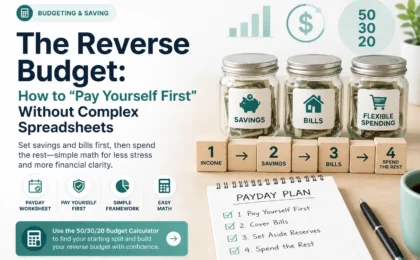
For example, the reverse budget starts by separating planned savings, bills, and reserves before estimating flexible spending. The leftover money method uses a similar idea, but focuses specifically on the final remaining number.
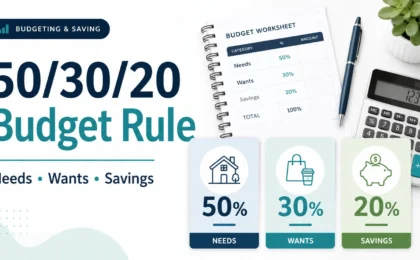
The 50/30/20 Budget Calculator can also provide a broad starting split for needs, wants, and savings. The leftover money method can then turn those broad categories into a specific monthly subtraction table.
Related Calculator
Start with a broad monthly split.
The 50/30/20 Budget Calculator divides monthly take-home income into needs, wants, and savings. That broad split can be used as a starting point before estimating leftover money.
View the 50/30/20 Budget CalculatorA Payday Version of the Same Calculation
Monthly math is useful, but paychecks do not always arrive monthly. A paycheck version can use the same formula with pay-period numbers.
For example:
Paycheck amount − bills due before the next paycheck − planned reserves = leftover money for that pay period
Here is a simple pay-period example:
| Pay-Period Line | Example Amount |
|---|---|
| Take-home paycheck | $2,000 |
| Bills due before next paycheck | − $950 |
| Planned reserves | − $250 |
| Estimated leftover money | $800 |
This version can be helpful when bill timing matters. A monthly leftover number may look fine, while a specific pay period may feel tighter because several bills arrive close together.
Blind Spots That Can Make Leftover Money Look Larger
The leftover money method depends on the quality of the inputs. If important costs are missing, the final number may look larger than it really is.
Blind Spot Snapshot
The leftover number can look too high when annual bills, irregular repairs, subscriptions, seasonal costs, or pay-period timing are not included in the fixed bill or reserve categories.
Commonly missed inputs include:
- annual subscriptions;
- insurance bills that are not paid monthly;
- car registration or inspection costs;
- seasonal utility changes;
- school costs;
- medical or dental copays;
- holiday spending;
- home or car repairs;
- pet care;
- small recurring app charges.
The calculation becomes more useful when those items are not left floating outside the table.
When the Number Looks Wrong
Sometimes the leftover money calculation produces a number that does not match how the month feels. That usually means one of the inputs needs more detail.
For example:
- the fixed bills total may be missing a recurring payment;
- groceries or transportation may be partly variable and partly predictable;
- annual costs may not have been converted into monthly reserves;
- paycheck timing may not line up cleanly with bill due dates;
- the month may include an unusual one-time cost;
- some spending may happen before the calculation is reviewed.
The method is not meant to explain every detail of household cash flow. It is meant to provide a first clear number: what remains after the predictable parts are removed.
Leftover Money Method vs. Zero-Based Budgeting
The leftover money method is simpler than zero-based budgeting. A zero-based budget usually assigns every dollar to a specific category. The leftover method focuses on separating fixed bills and planned reserves, then estimating what remains.
| Method | Main Focus | Common Tradeoff |
|---|---|---|
| Leftover money method | Estimates what remains after bills and reserves | Simple, but less detailed |
| Zero-based budget | Assigns every dollar to a category | Detailed, but more maintenance |
| 50/30/20 budget | Uses broad percentage categories | Easy to start, but may need adjustment |
Each method organizes the same income in a different way. The best comparison is not which label sounds better, but which math question the method is trying to answer.
What This Article Cannot Tell You
This article explains a general budgeting calculation. It cannot decide whether a specific leftover amount is high, low, safe, risky, or appropriate for any household.
It does not determine:
- how much any person should spend;
- how much any person should save;
- whether a household should change expenses;
- whether a bill, subscription, or purchase should be kept or removed;
- which bank, account, app, product, or provider to use;
- how to handle debt, taxes, investments, insurance, or legal questions.
The purpose is only to show how the monthly number can be calculated and interpreted as an estimate.
The Bottom Line
The leftover money method is a simple way to calculate money left after bills. It starts with monthly take-home income, subtracts fixed bills, subtracts planned savings or reserves, and shows the remaining flexible spending money.
The method is useful because it makes the leftover number visible before the month becomes a blur of small transactions. It does not decide what the number should mean. It only explains how the number is calculated.
For a broader starting point, the 50/30/20 Budget Calculator can estimate needs, wants, and savings. For a payday-first approach, the reverse budget uses a similar order of operations: planned categories first, flexible spending second.
FAQ
What is the leftover money method?
The leftover money method is a simple budgeting calculation that subtracts fixed bills and planned savings or reserves from monthly take-home income. The result is the estimated money left after bills.
How do you calculate money left after bills?
The basic formula is monthly take-home income minus fixed bills minus planned savings or reserves. The result is the estimated leftover money for the month.
Is leftover money the same as flexible spending money?
In everyday budgeting language, leftover money is often similar to flexible spending money. It usually means the amount left after fixed bills and planned reserves are accounted for.
Is leftover money the same as fun money?
Not always. Fun money usually refers to optional lifestyle spending. Leftover money may also need to cover groceries, transportation, personal care, household items, and other variable costs.
What should be included in fixed bills?
Fixed bills can include predictable recurring costs such as housing, utilities, insurance, internet, phone service, transportation payments, subscriptions, and required monthly payments.
Why can leftover money look higher than it really is?
Leftover money can look too high when annual bills, irregular expenses, repairs, subscriptions, seasonal costs, or pay-period timing are not included in the calculation.
Disclaimer & Editorial Disclosure
Educational Purposes Only: This content is for educational and informational purposes only. It explains general budgeting math and simple household cost visibility. It does not constitute financial, tax, legal, banking, investment, credit, debt, insurance, or professional advice.
No Individual Recommendation: The leftover money examples in this article do not determine how much any person should spend, save, reserve, reduce, transfer, or allocate. Actual household budgets vary by income, bills, timing, location, household size, debt, goals, and personal circumstances.
Editorial Note: Wealth Logic Hub publishes educational content about everyday math, budgeting visibility, and calculator-based learning. References to leftover money, flexible spending money, fun money budget, fixed bills, planned reserves, and discretionary income calculation are provided for general informational purposes only.