For the average American homeowner, a mortgage is often seen as a static monthly obligation. However, in an evolving economic landscape, your home is more than just a place to live—it is a powerful financial tool that can be optimized. Strategic mortgage refinancing allows you to renegotiate the terms of your largest debt, potentially lowering your interest rate, shortening your loan term, or unlocking the liquidity needed to accelerate your broader wealth-building goals.
1. Rate-and-Term Refinancing: Maximizing Long-Term Savings
The most common motivation for refinancing is securing a lower interest rate. Even a 0.5% or 1% reduction in your Annual Percentage Rate (APR) can save you tens of thousands of dollars over the life of the loan. By switching from a 30-year to a 15-year mortgage during a rate dip, you not only pay less interest but also build equity at a much faster pace, significantly bringing forward your date of complete financial independence.
2. The Power of the Cash-Out Refinance
A Cash-Out Refinance allows you to replace your current mortgage with a new, larger loan, pocketing the difference in cash. This is a premier strategy for high-level financial management, as mortgage interest rates are typically much lower than credit card or personal loan rates. Smart homeowners use this liquidity to:
- Fund High-ROI Home Improvements: Increasing the property’s appraisal value.
- Consolidate High-Interest Debt: Moving expensive credit card balances into a lower-rate mortgage.
- Invest in New Assets: Providing the down payment for a second investment property or diversifying into the stock market.
3. Eliminating Private Mortgage Insurance (PMI)
If you purchased your home with less than a 20% down payment, you are likely paying Private Mortgage Insurance (PMI). With the appreciation of property values in many U.S. markets, your current Loan-to-Value (LTV) ratio may have dropped below the 80% threshold. Refinancing based on a new, higher appraisal can eliminate the need for PMI entirely, instantly adding hundreds of dollars back to your monthly cash flow without changing your lifestyle.
4. Understanding the Break-Even Point
Refinancing is not free; it involves closing costs, appraisal fees, and origination points. To determine if a refinance is a “gold” move, you must calculate your break-even point—the amount of time it takes for your monthly savings to cover the upfront costs of the new loan. If you plan to stay in your home beyond this period, the refinance is an immediate net positive for your net worth.
Conclusion: Beyond the Monthly Payment
Mortgage management should be a proactive part of your financial strategy. By moving beyond a “set it and forget it” mentality, you can leverage your home’s equity to lower your costs and fund your future. Whether you are seeking a lower rate or strategic liquidity, a well-timed refinance is a cornerstone of professional wealth management in the modern era.

Related articles

The 2026 Jumbo Loan Blueprint: High-Net-Worth Refinancing and Interest

The 2026 Liquidity Play: Leveraging Home Equity as a Strategic Credit Reserve
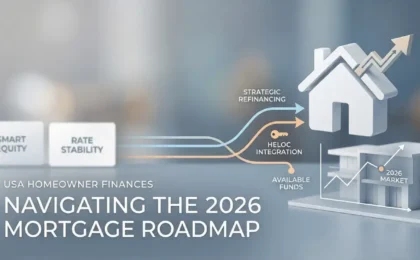
The 2026 Mortgage Roadmap: Strategic Refinancing and HELOC Integration in a Stabilizing Rate Market