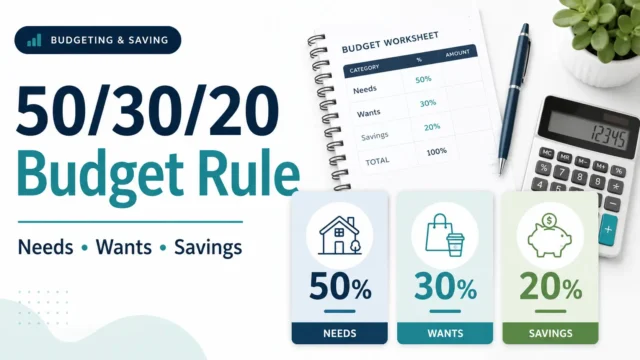
The 50/30/20 Budget Rule Math: How to Calculate Your Categories
The 50/30/20 budget rule divides monthly net income into needs, wants, and savings categories using a simple percentage formula.
Read the guideEveryday Math Made Simple
Wealth Logic Hub publishes educational calculators, budgeting frameworks, salary estimates, savings goal resources, and practical guides for simple money math.
Content Categories
Browse educational guides and tools focused on budgeting, earning, saving, and everyday financial awareness.
Monthly budgets, saving habits, emergency targets, and simple money organization.
Salary basics, pay periods, income planning, and practical earning math.
Recurring costs, daily expense awareness, subscriptions, and household spending.
Educational calculators and simple tools for common money questions.
Featured Guide
The 50/30/20 budget rule divides monthly net income into needs, wants, and savings categories using a simple percentage formula.
Read the guideEditor’s Picks
Latest Guides

A $100k salary does not mean $8,333 lands in your account every month. This breakdown shows how taxes, deductions, and fixed bills can change…
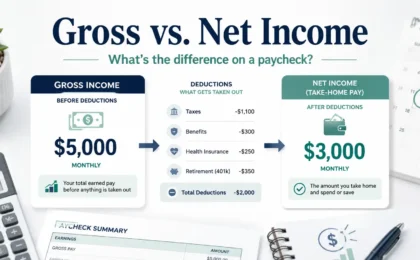
Gross income is pay before taxes and deductions. Net income is take-home pay after paycheck deductions are subtracted.
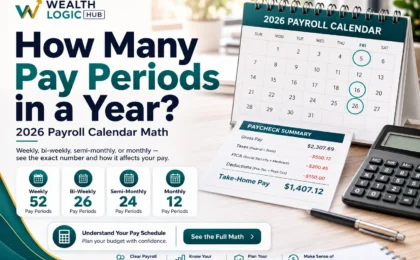
A clear breakdown of how many pay periods are in a year for weekly, bi-weekly, semi-monthly, and monthly pay schedules, with simple payroll calendar…

1099 side hustle tax math shows how gross gig income changes after business expenses and an estimated tax set-aside are separated.
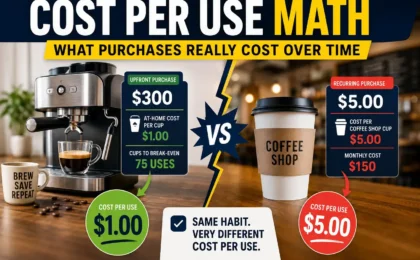
Cost per use math shows how a purchase price changes when maintenance costs and realistic usage are spread across the life of an item.

Buying in bulk can look cheaper, but the real math depends on unit price, membership fees, usable quantity, storage, and waste risk.

The leftover money method shows how to estimate money left after bills by subtracting fixed costs and planned reserves from monthly take-home income.
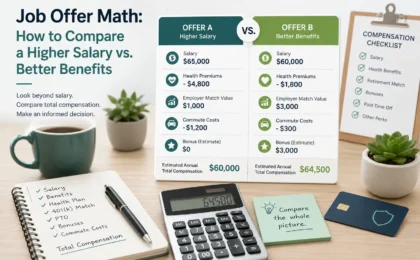
A higher salary does not always mean higher total compensation. This guide shows simple tables for comparing salary, benefits, premiums, employer match value, and…
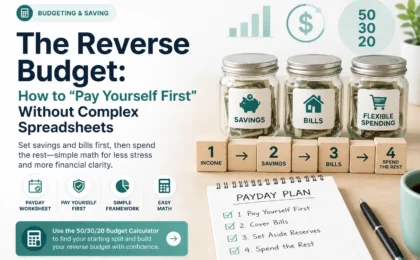
A reverse budget starts with savings and fixed bills first, then leaves the remaining money for flexible spending without tracking every small purchase.
How Our Tools Work
Our approach is focused on simple arithmetic, visible assumptions, browser-based utility, and educational estimates.
We favor formulas that readers can understand, review, and test with their own inputs.
Calculator inputs are intended to be processed in the browser whenever possible, reducing unnecessary data handling.
Our guides and tools are designed for learning and planning awareness, not personalized professional advice.